Techoelite smart homes refers to connected home setups that combine devices such as smart lights, locks, thermostats, cameras, sensors, and appliances. The term does not clearly identify one verified hardware manufacturer. In practice, readers should evaluate the actual devices, compatibility standards, security features, support, and automation platform behind the system.
That distinction matters if you are thinking about buying smart home equipment. Instead of assuming there is one Techoelite product ecosystem, look at the actual devices, communication standards, software, security practices, and support behind the setup.
What Are Techoelite Smart Homes?
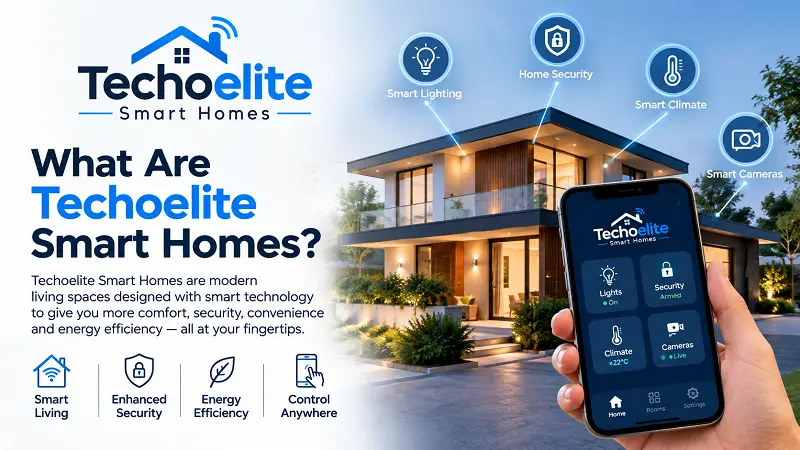
The term generally points toward a connected home where multiple systems can be controlled or automated together.
These systems may include:
- Smart lighting
- Smart locks
- Security cameras
- Motion and door sensors
- Thermostats
- Smart plugs and switches
- Connected appliances
- Speakers and entertainment equipment
- Energy monitoring devices
A smart home becomes more useful when these devices can work together rather than operating as isolated gadgets.
For example, an arrival routine could unlock an approved smart lock, turn on selected lights, and adjust the temperature. The exact functions depend on the products and automation platform being used.
Is Techoelite a Smart Home Brand?
This is where buyers should be careful.
Current search results do not establish a single, widely recognized hardware manufacturer called Techoelite that produces a complete proprietary range of smart locks, thermostats, cameras, and hubs.
The phrase appears across several websites with different descriptions. One website presents Techoelite Smart Homes as an informational destination covering home improvement and lifestyle topics. Other pages use the term to describe connected-home concepts rather than a clearly documented product line.
So, if you encounter a product advertised specifically as “Techoelite,” verify the manufacturer and product documentation before purchasing.
Check the product’s:
- Manufacturer name
- Official support page
- Compatibility information
- Firmware update policy
- Privacy policy
- Warranty
- Required app or hub
- Supported smart home standards
This simple check can prevent confusion between a content website, a product name, and a genuine hardware manufacturer.
How Does a Smart Home System Work?
A connected home normally has several layers working together.
Devices
These are the physical products installed around the home. Examples include lights, locks, cameras, thermostats, sensors, and switches.
Network
The devices need a way to communicate. Depending on the product, this may involve Wi-Fi, Ethernet, Thread, Bluetooth, or another supported technology.
Controller or Platform
A controller, hub, app, or smart home platform provides a way to manage devices and create automations.
Automations
Automations connect individual actions into useful routines.
For example:
Trigger: A motion sensor detects movement.
Condition: It is after sunset.
Action: Hallway lights turn on.
This is more useful than simply having a light that can be switched on from a phone.
Why Matter Matters When Choosing Smart Home Devices
Compatibility is one of the biggest issues in smart home technology.
The Connectivity Standards Alliance describes Matter as an IP-based smart home standard designed to improve interoperability between compatible devices and ecosystems. Matter operates with networking technologies including Wi-Fi and Thread, with Bluetooth Low Energy used for commissioning.
Matter has also continued to develop. Matter 1.5 added support for areas including cameras, closures, soil sensors, and additional energy management capabilities. In June 2026, the Alliance announced Matter 1.6, which introduced further improvements around device setup, multi-ecosystem experiences, and context-aware control.
This does not mean every Matter-certified device will automatically solve every compatibility problem.
Before buying, check whether the specific device supports the features you actually need and whether your chosen controller or ecosystem supports them.
What Features Should a Smart Home Have?
There is no single feature list that makes a home “elite.” A useful system is one that solves real household problems without creating unnecessary complexity.
Smart Lighting
Smart lights and switches can be scheduled, controlled remotely, or triggered by sensors.
Useful examples include:
- Turning outdoor lights on at sunset
- Switching off selected lights at bedtime
- Creating low-light evening scenes
- Automatically lighting a hallway when motion is detected
Smart Security
Connected security can include cameras, doorbells, locks, contact sensors, and motion detectors.
The important question is not simply whether a device has a camera or an app. Check how alerts work, where recordings are stored, how accounts are protected, and how long the manufacturer provides software support.
Climate Control
Smart thermostats can automate temperature settings based on schedules, occupancy, or other inputs.
The U.S. Department of Energy notes that smart thermostats can use occupancy or activity information and provide additional control over heating and cooling.
However, energy savings are not automatic. Results depend on the home’s HVAC system, climate, insulation, settings, and how the thermostat is used.
Smart Plugs and Switches
These are useful because they can add automation to ordinary appliances without replacing the entire appliance.
For example, a compatible smart plug could allow a lamp to follow a schedule or be switched off remotely.
Energy Monitoring
Energy monitoring can help homeowners understand when electricity is being consumed.
Matter has also expanded its energy management capabilities. Matter 1.3 introduced energy reporting features, while later releases continued expanding energy-related functionality.
What Should You Check Before Buying?
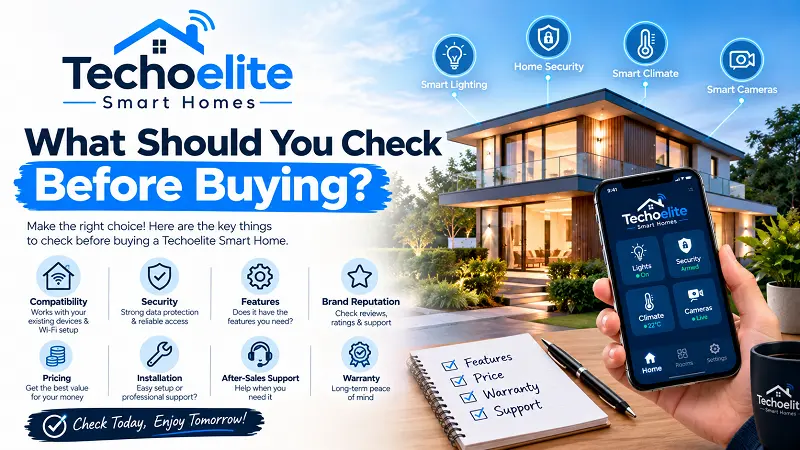
The most important buying decision is not the number of smart features.
It is whether the system will remain useful after installation.
1. Compatibility
Check whether devices work with your existing platform and whether they support the standards you intend to use.
2. Internet Dependence
Some devices continue to perform certain functions locally when internet access is unavailable. Others depend heavily on cloud services.
Understand what happens when your internet connection goes down.
3. Software Support
A connected device needs ongoing software and security support.
Before buying, look for a clear manufacturer support page and information about firmware updates.
4. Privacy
Cameras, microphones, sensors, and connected appliances can generate sensitive information.
Read the privacy policy and determine what data is collected, where it is processed, and which third parties may receive it.
5. Account Security
Use unique passwords and enable multi-factor authentication where available.
The Federal Trade Commission recommends securing the router that connects internet-connected devices, changing default settings, using encryption, and keeping software updated.
6. Replacement and Reset Options
Think about what happens if you sell the home, replace the device, or close your account.
The FTC recommends removing personal information and administrative access and resetting connected devices when ownership changes.
How to Make a Techoelite Smart Home More Secure
Security should be planned before installing dozens of connected devices.
Start with the router because it provides the network connection for many smart home products. NIST specifically highlights the importance of router cybersecurity as smart home IoT devices increasingly depend on home networks.
A practical security checklist includes:
- Change default passwords
- Use unique passwords for important accounts
- Enable multi-factor authentication where available
- Install firmware updates
- Secure the home Wi-Fi network
- Review device permissions
- Remove devices you no longer use
- Check privacy settings
- Keep an inventory of connected devices
- Use a separate network for IoT devices when appropriate
NIST’s consumer IoT guidance also identifies cybersecurity capabilities that should be considered when evaluating connected consumer products.
Common Mistakes to Avoid
Buying Devices Without Checking Compatibility
A collection of excellent individual products can still become frustrating if they require separate apps and cannot communicate properly.
Automating Everything at Once
Start with a few useful routines.
Lighting, entry security, and climate control are often easier to understand than trying to automate every appliance on the first day.
Ignoring Network Quality
More connected devices increase the importance of a reliable home network.
A smart home with weak Wi-Fi can feel less convenient than a smaller system that works consistently.
Choosing Based Only on Price
A cheaper device may cost more over time if it has poor support, weak software, limited compatibility, or becomes difficult to replace.
Treating Privacy as an Afterthought
A camera or voice-enabled device can provide convenience while also introducing privacy considerations.
NIST research has found that smart home users have expressed concerns about security and privacy while sometimes lacking the knowledge or options needed to address those concerns effectively.
A Simple Way to Build a Smart Home
You do not need to automate an entire house immediately.
A sensible approach is:
Step 1: Identify a problem.
Maybe you want better lighting, easier entry control, or improved temperature management.
Step 2: Choose the platform.
Decide which app, hub, or ecosystem you want to use.
Step 3: Check compatibility.
Look for support for the devices and standards you intend to add.
Step 4: Secure the network.
Update the router and connected devices before expanding the system.
Step 5: Add one useful automation.
Create something you will actually use every day.
Step 6: Expand gradually.
Add more devices only when they solve another genuine problem.
This approach also makes troubleshooting easier because you know which component was added or changed.
Are Techoelite Smart Homes Worth Considering?
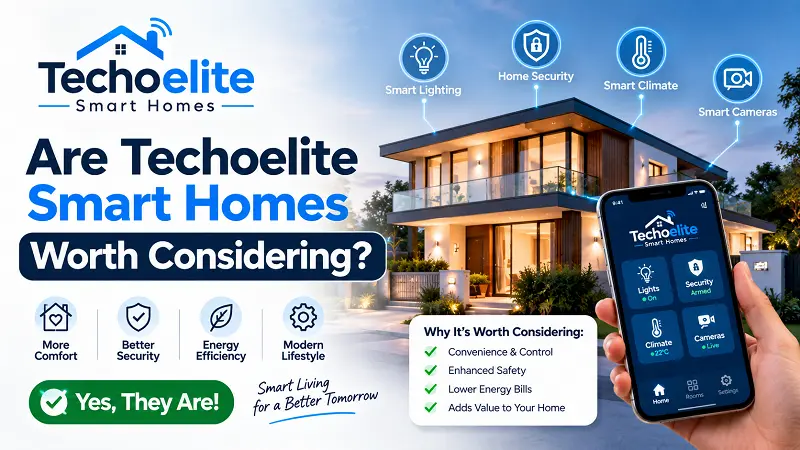
That depends on what you mean by “Techoelite.”
If you mean a professionally planned, highly integrated smart home, the concept is well established. Connected lighting, security, climate control, sensors, and energy management can provide practical benefits when they are properly designed.
If you mean a specific Techoelite-branded product or company, verify the exact manufacturer first. The available online information does not establish a single, clearly documented hardware ecosystem under that name.
For buyers, the better question is therefore not simply, “Is Techoelite good?”
Ask:
What exactly am I buying, who makes it, what does it support, how is it secured, and what happens if the company stops supporting it?
Those answers provide much more useful information than a brand label alone.
Final Takeaway
Techoelite smart homes is an ambiguous search term rather than a clearly established name for one universal smart home product ecosystem.
The underlying technology is real and increasingly interoperable. Standards such as Matter are designed to help compatible products from different manufacturers work together, while security guidance from organizations such as NIST and the FTC shows why network protection, software updates, privacy, and account security should be part of every connected-home plan.
If you are researching a specific Techoelite product, verify the manufacturer, official documentation, compatibility, support policy, and security practices before making a purchase.
7. FAQ Section
Is Techoelite Smart Homes a real company?
The phrase is used online in several different ways. A website named Techoelite Smart Homes describes itself as an informational resource focused on home improvement, interior design, and lifestyle content. Current search evidence does not establish one universally recognized hardware manufacturer behind the term.
What does Techoelite smart homes mean?
It generally refers to connected-home concepts involving devices such as smart lighting, security equipment, thermostats, sensors, appliances, and automation platforms. The exact meaning depends on the website or product using the term.
Are Techoelite smart homes expensive?
There is no reliable universal price because the term does not identify one standardized product package. Costs depend on the devices, installation requirements, network equipment, automation platform, and size of the home.
Is Matter important for a smart home?
Matter can be useful because it is designed to improve interoperability among compatible smart home devices and ecosystems. However, buyers should still check the exact Matter features supported by each product before purchasing.
How can I secure a smart home?
Start by securing the router and accounts, changing default credentials, enabling multi-factor authentication where available, installing updates, and reviewing privacy settings. The FTC and NIST both provide consumer guidance for securing connected devices and networks.